Cyber risk audit tools for MSPs: 7 options compared for 2026
Every cybersecurity engagement starts with a risk assessment. It's your roadmap for improving client defenses, and without it, you're just guessing where the problems are.
But here's the problem: most cyber risk audit tools weren't built for how MSPs actually work. Spreadsheets don't scale across dozens of clients. Enterprise GRC platforms require consultants and months to implement. And clients want answers this week, not next quarter.
We've evaluated seven cyber risk audit tools specifically through the lens of MSP workflows. Our criteria: framework alignment (NIST, ISO 27001), multi-tenancy, stack integration, pricing transparency, and time-to-value. Here's what actually works.
What a cyber risk audit tool actually does
A cyber risk audit tool identifies, analyzes, and prioritizes cybersecurity risks using standardized frameworks. The core functions include asset inventory, control gap analysis, risk scoring, remediation tracking, and compliance mapping.
MSPs need something different from enterprise security teams. You need speed, standardization across clients, and integration with your existing PSA and RMM workflows. Most tools stop at generating reports. The better ones close the loop by turning findings into actionable tickets and automated remediation.
If you're also evaluating broader automation solutions, check out our breakdown of the 7 best MSP automation tools in 2026.
Cyber risk audit tool comparison
| Tool | Best for | Frameworks | Pricing | Free trial |
|---|---|---|---|---|
| Cynomi | MSPs offering vCISO services | ISO 27001, SOC 2, HIPAA, PCI DSS | Contact sales | Demo available |
| Apptega | Mid-market MSSPs | NIST, ISO, cross-framework | Contact sales | Not specified |
| Vanta | SaaS compliance automation | SOC 2, ISO 27001, HIPAA, GDPR | ~$10K/year+ | Available |
| LogicGate | Enterprise GRC | Open FAIR, NIST, custom | Enterprise | Demo available |
| HHS SRA Tool | Healthcare on tight budgets | HIPAA | Free | N/A |
| NIST PRAM | Technical DIY assessments | Privacy-focused | Free | N/A |
| RSA Archer | Large enterprises | Multi-domain GRC | $50K/year+ | Contact sales |
1. Cynomi
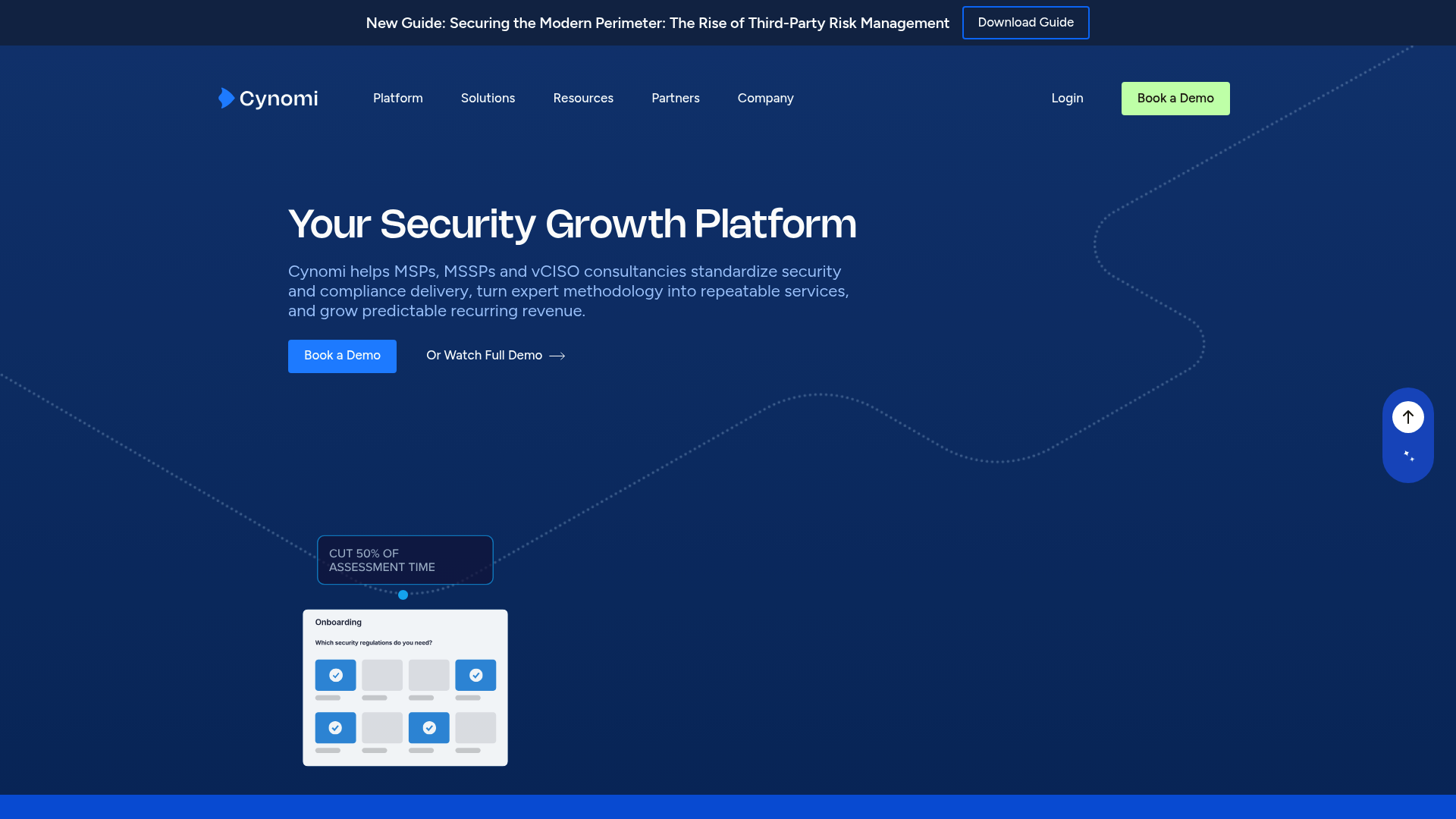
Cynomi is an AI-powered vCISO platform built specifically for MSPs, MSSPs, and consultancies. Unlike generic GRC tools, it was designed from the ground up for multi-client service delivery.
The platform automates security assessments with continuous monitoring, cutting assessment time by 50% according to their partners. It includes an out-of-the-box risk register tailored to each client, automated compliance mapping to ISO 27001, SOC 2, HIPAA, and PCI DSS, plus client-facing dashboards that make your services visible.
Source: Cynomi partner metrics
Pricing: Contact sales for custom quotes based on client count.
Best for: MSPs wanting to offer vCISO services without hiring senior security staff for every client
Pros:
- Purpose-built for service providers with true multi-tenancy
- Real CISO expertise embedded in the methodology, not just automation
- Fast deployment compared to enterprise alternatives
Source: Cynomi platform overview
Cons:
- Pricing opaque (no public tiers)
- May be overkill for smaller MSPs with simple compliance needs
A VP of Advisory at Secure Cyber Defense reported: "Cynomi allows us to bring client discovery down to 4 hours instead of weeks."
Source: Cynomi customer case study
2. Apptega
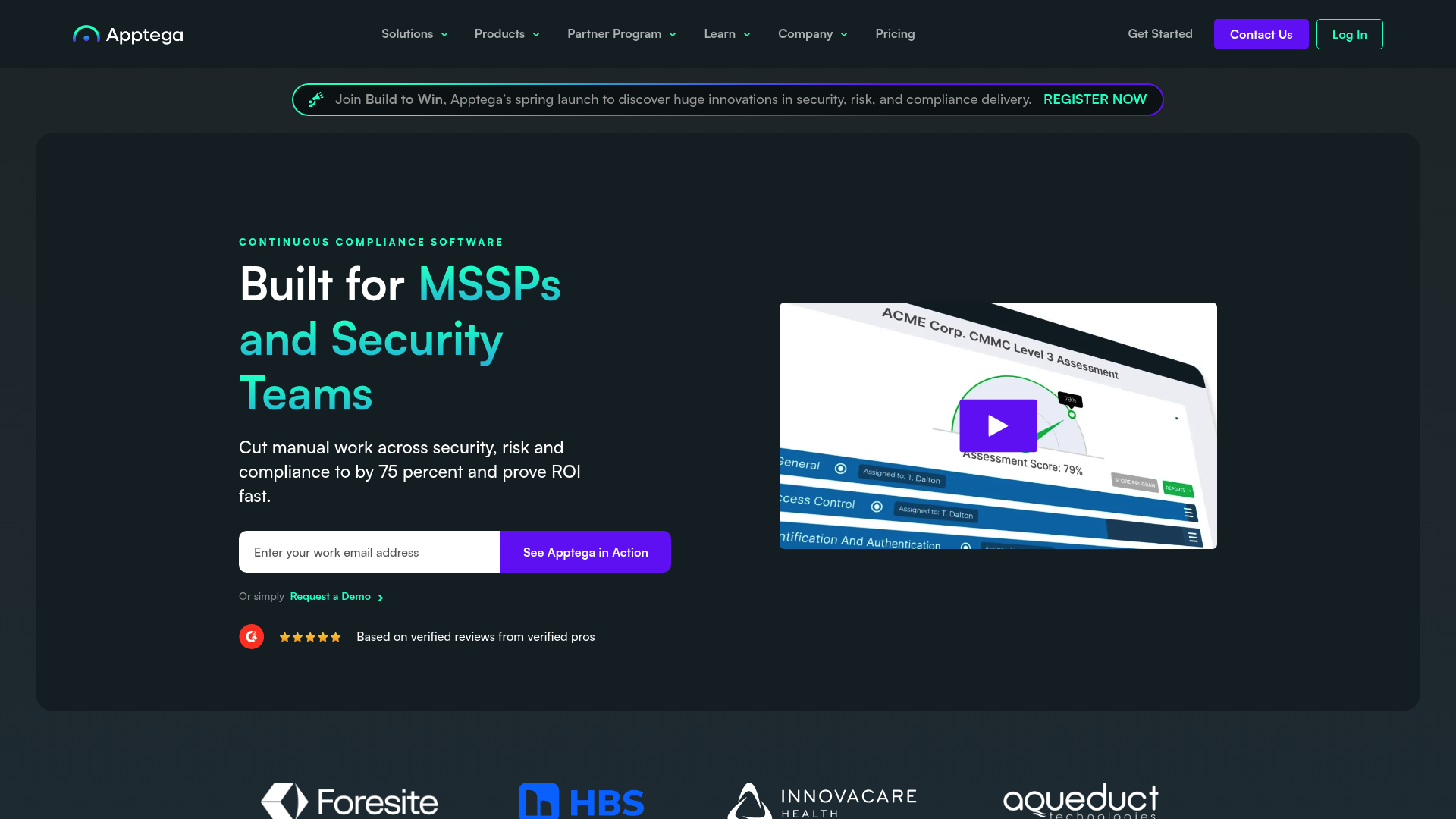
Apptega provides GRC software designed for MSSPs to manage security, risk, and compliance in one dashboard. The platform focuses on cutting manual work while increasing revenue for service providers.
The Assessment Manager automates security and compliance assessments with built-in templates. The Risk Manager integrates assessments with risk tracking and framework cross-walking across NIST, ISO, and others. For vendor management, the Third-Party Risk module includes automated questionnaires, vendor scoring, and continuous monitoring.
Source: Apptega product features
Pricing: Contact sales for custom quotes
Best for: MSPs and MSSPs wanting full lifecycle assessment-to-action at mid-market pricing
Pros:
- Built specifically for managed security service providers
- Covers the full lifecycle from assessment through remediation
- Strong framework coverage with cross-walking capabilities
Cons:
- Less mature platform compared to enterprise alternatives
- Pricing not publicly disclosed
3. Vanta

Vanta focuses on continuous compliance automation for security standards. It's best known for accelerating SOC 2 and ISO 27001 certification timelines, which makes it popular with SaaS companies.
The platform automates evidence collection through 100+ integrations with cloud providers, identity systems, HRIS, and security tools. Real-time compliance dashboards show current posture across SOC 2, ISO 27001, HIPAA, GDPR, PCI DSS, and NIST frameworks. The recent acquisition of Riskey adds continuous vendor risk monitoring.
Source: Vanta integrations directory
Pricing: Starts around $10,000/year, varies by organization size and frameworks. Contact sales for specific quotes.
Best for: MSPs serving SaaS clients who need audit-ready compliance fast
Pros:
- Fastest time to certification in the industry
- Extensive integration ecosystem (100+ tools)
- Clear ROI for clients facing vendor security reviews
Cons:
- Audit-focused rather than comprehensive risk assessment
- No native PSA integration for MSP workflows
- Pricing can escalate quickly with multiple frameworks
4. LogicGate Risk Cloud

LogicGate is an AI-powered GRC platform for enterprises, offering 40+ purpose-built applications with no-code configuration. It's a Gartner Leader in the GRC space, which tells you about its capabilities and complexity.
The platform includes Risk Cloud Quantify for financial risk quantification using Monte Carlo simulations and the Open FAIR Model. Spark AI automates data entry and tedious tasks. The no-code workflow builder lets you configure complex GRC processes without developers.
Source: LogicGate platform features
Pricing: Enterprise pricing, contact sales. Expect significant implementation investment.
Best for: Larger MSPs with mature risk programs needing custom workflows and financial quantification
Pros:
- Named Leader in Gartner Magic Quadrant for GRC Tools
- Highly configurable no-code platform
- Strong financial quantification with Open FAIR and Monte Carlo
Cons:
- Requires dedicated administrator
- Longer implementation timeline
- Qualitative assessments require significant setup
Customer metrics from LogicGate case studies show 20,000+ workflows automated and $250K+ annual savings through automation.
Source: LogicGate customer metrics
5. HHS Security Risk Assessment Tool
The HHS SRA Tool is a free downloadable application from the Office of the National Coordinator for Health IT. It was developed specifically to help healthcare providers conduct HIPAA Security Rule assessments.
The Windows desktop app uses a wizard-based approach with multiple-choice questions, threat and vulnerability assessments, and asset and vendor management. An Excel workbook version is available for non-Windows users. Reports can be saved and printed for audit records.
Version 3.6 added assessment confirmation buttons with "reviewed-by" dates for audit trails, updated risk scales to match NIST scoring, and improved content for the current threat environment.
Source: HHS SRA Tool download page
Pricing: Free. Downloads: 73.1 MB MSI (Windows) or 141 KB Excel workbook.
Best for: MSPs serving healthcare clients on tight budgets
Pros:
- Official government tool from ONC and OCR
- Completely free with no usage limits
- Designed for OCR audits and compliance reviews
Cons:
- Single-user desktop application (no multi-tenancy)
- Windows-only for full application
- Manual data entry with no integrations
6. NIST Privacy Risk Assessment Methodology (PRAM)
PRAM is a free framework from NIST that applies the risk model from NISTIR 8062. It helps organizations analyze, assess, and prioritize privacy risks rather than just security risks.
The tool includes four worksheets: framing business objectives and privacy governance, assessing system design with data mapping, prioritizing risk, and selecting controls. A catalog of problematic data actions is included to guide assessment.
Source: NIST PRAM documentation
Pricing: Free and open source. Available on GitHub.
Best for: Technical MSPs comfortable with DIY assessments who need privacy-specific evaluation
Pros:
- Direct from NIST, the gold standard for risk assessment
- Specifically addresses privacy risks, not just security
- Designed to drive collaboration across organizational silos
Cons:
- No automation, requires manual completion
- Requires expertise to implement effectively
- No built-in reporting or dashboards
7. RSA Archer
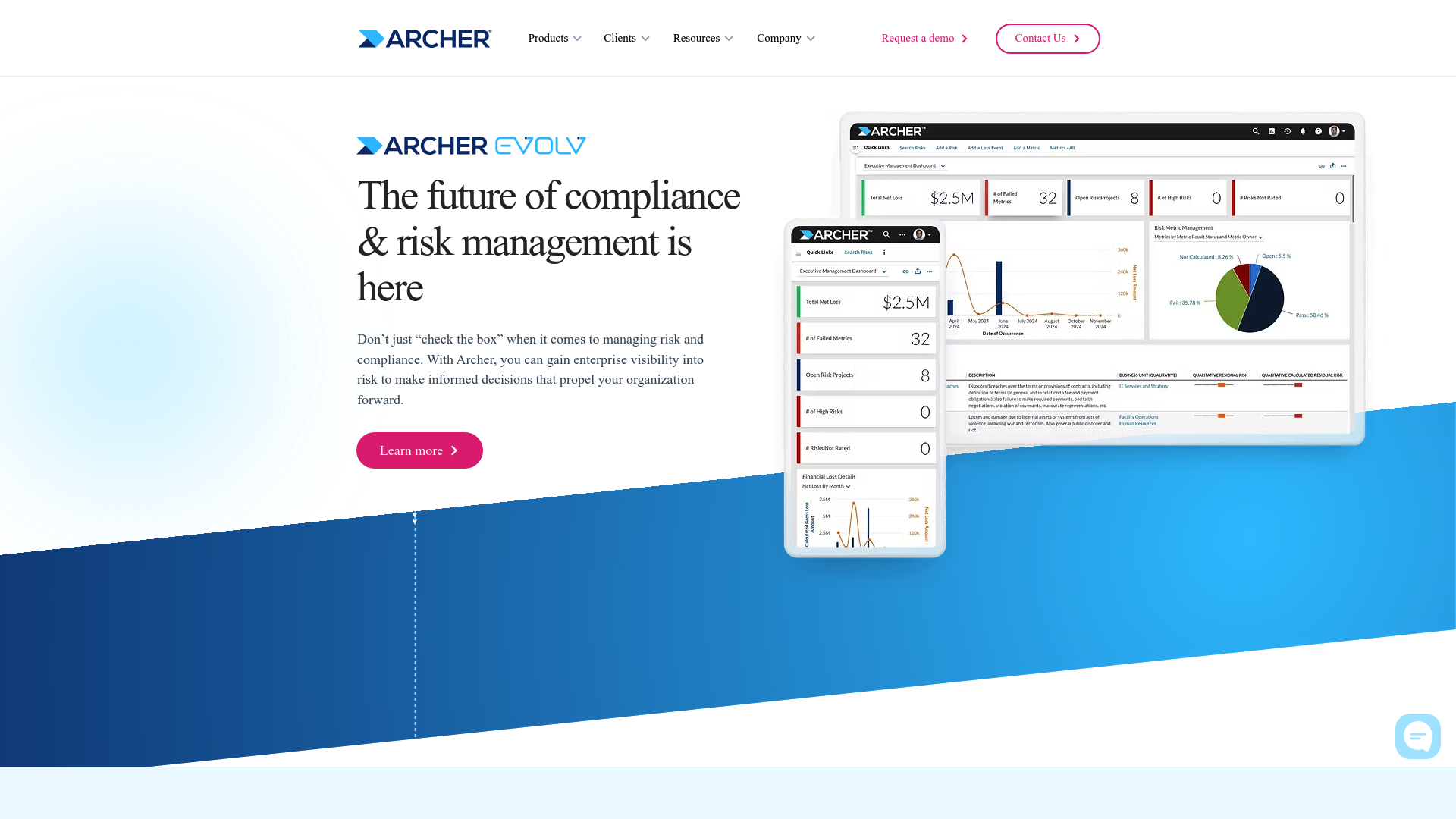
Archer has been a leader in enterprise risk management for over 20 years. It's the most mature platform on this list, which also means it's the most complex and resource-intensive.
The platform includes Archer Evolv Compliance for AI-powered regulatory change management, Archer Evolv Risk for quantification across operational, enterprise, IT, and third-party domains, plus modules for audit management, ESG, and resilience. The company reports that 80% of clients manage multiple risk domains on the platform.
Source: RSA Archer platform overview
Pricing: Enterprise pricing, typically $50,000+ annually.
Best for: Large MSPs or those serving enterprise clients with complex, multi-domain requirements
Pros:
- Named Leader in Verdantix Green Quadrant GRC Software 2025
- 20+ years of risk management expertise
- Deep multi-domain coverage
Cons:
- Enterprise-focused, not suitable for small MSPs
- Resource-intensive implementation requiring dedicated staff
- Long deployment timelines measured in months
How to choose the right cyber risk audit tool for your MSP
Start with your client mix. Healthcare clients need HIPAA alignment. SaaS companies want SOC 2. Financial services require PCI DSS. The frameworks your clients need should drive your tool selection.
Evaluate integration requirements. Will assessment data flow into your PSA to automatically create tickets? Does the tool connect to your RMM for continuous monitoring? Standalone assessments create more manual work.
Consider your growth model. Per-client pricing works when you're small. Unlimited assessments matter when you scale. Calculate the break-even point based on your projected client count.
Factor in expertise. Do you have security staff who can interpret raw assessment data, or do you need guided assessments with built-in recommendations? Tools like Cynomi embed CISO expertise; NIST PRAM assumes you have it.
The free vs. paid reality check: free tools save money but cost time. At $150/hour billable rate, spending 8 hours on a manual assessment costs $1,200 in opportunity cost. A tool that cuts that to 2 hours pays for itself quickly.
Moving from assessment to action
Here's where most cyber risk audit tools fall short. They generate reports that sit unread in client inboxes. What MSPs actually need is assessment findings that become tickets, tasks, and automated remediation.
The gap between identifying a risk and fixing it is where most security programs fail. A client gets a 40-page risk assessment report. They nod politely. Nothing changes. Six months later, the same vulnerabilities exist.
At Rallied, we think about this differently. Risk findings should flow directly into your PSA as tickets. Those tickets should trigger automated remediation workflows. The system should verify the fix and update the risk register. That's a closed loop.
Our use cases show how this works in practice. The ROI calculator helps you quantify the time savings.
For more on how AI is changing MSP operations, read our analysis of MSP AI in 2026: from hype to actual execution.
Start closing the loop on cyber risk
The right cyber risk audit tool depends on your client base, budget, and how fast you need to move. Free options like the HHS SRA Tool work for healthcare specialists on tight budgets. Cynomi makes sense if you're building a vCISO practice. Vanta fits SaaS-focused MSPs. RSA Archer only makes sense at enterprise scale.
But remember: risk assessments are just the start. What matters is what you do with the findings. The best tool is the one that doesn't just tell you what's broken, but helps you fix it.
See how Rallied turns assessment outputs into automated remediation.
Frequently Asked Questions
What should I look for in a cyber risk audit tool for my MSP?
Look for multi-tenancy to manage multiple clients, framework alignment with your client base (NIST, ISO, HIPAA), and integration capabilities with your PSA and RMM. The tool should reduce assessment time, not add overhead.
How much does a cyber risk audit tool typically cost?
Free options exist (HHS SRA Tool, NIST PRAM). Mid-tier platforms like Vanta start around $10,000/year. Enterprise tools like RSA Archer typically run $50,000+. Most MSP-focused tools use custom pricing based on client count.
Can I use a free cyber risk audit tool for my MSP clients?
Yes, but understand the limitations. Free tools like the HHS SRA Tool work well for HIPAA assessments but lack multi-tenancy, automation, and integrations. They're manual tools that save money but cost time.
How long does it take to implement a cyber risk audit tool?
Simple tools like the HHS SRA Tool can be used immediately. MSP-focused platforms like Cynomi deploy in days. Enterprise GRC tools like LogicGate or Archer require weeks to months of implementation and configuration.
What's the difference between a risk assessment tool and a GRC platform?
Risk assessment tools focus on identifying and scoring risks. GRC platforms add governance, compliance management, audit workflows, and policy management. For MSPs, the distinction matters less than whether the tool fits your workflow.
Should my cyber risk audit tool integrate with my PSA?
Ideally, yes. Integration allows risk findings to automatically create tickets, track remediation progress, and maintain audit trails without duplicate data entry. Standalone tools create manual work between systems.