What Is Treeline? The AI-Powered MSP That Just Raised $25M
Most managed service providers still operate the same way they did 20 years ago. A user submits a ticket. A technician responds. Rinse and repeat. But Treeline, a San Francisco startup that emerged from stealth in March 2026, is betting that AI can rewrite this playbook entirely.
With $25 million in fresh funding from Andreessen Horowitz, Treeline is positioning itself as something different: a "modern IT operating system" that combines proprietary AI with human expertise. Here's what they're actually building and what it means for the MSP industry.
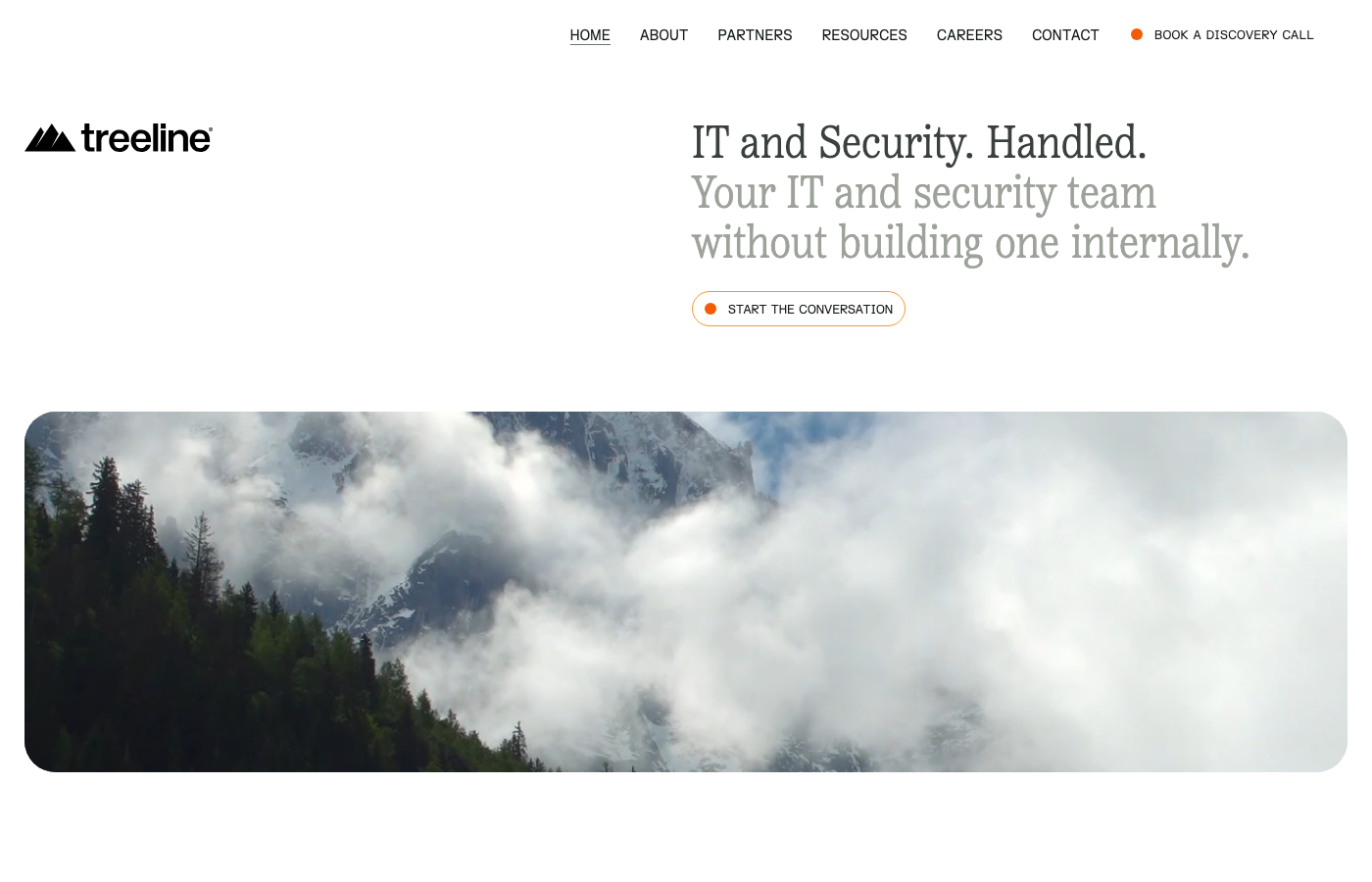
What Is Treeline?
Treeline is an AI-powered IT and security services provider founded in 2024 by Peter Doyle and Hussain Kader. Unlike traditional MSPs that rely heavily on manual processes and reactive ticket queues, Treeline built a software layer that sits at the center of IT operations, automating routine work while keeping technicians in the loop for complex issues.
The company currently has around 70 employees and serves approximately 200 clients, mostly companies with 30 to 500 users. Their Series A funding, announced March 31, 2026, was led by Andreessen Horowitz, marking the venture firm's first direct investment in managed services.
Here's the short version: Treeline wants to replace the traditional "labor augmentation" model with a software-first approach where AI handles the routine stuff and humans focus on what actually requires judgment.
How Treeline works: The AI-native approach
Traditional MSPs operate reactively. A password reset comes in, a technician handles it. A user can't access a file share, someone troubleshoots it. Treeline's approach flips this model. Their AI agents augment or directly resolve 98% of customer-submitted requests, according to their website, freeing up technicians to handle higher-level work.
The platform integrates with common business tools like Google Workspace, Slack, Microsoft Outlook, Okta, CrowdStrike, and Meraki. This allows Treeline to monitor these systems continuously and handle routine tasks automatically.
Key performance claims
Treeline publishes several specific metrics on their website:
| Metric | Claim |
|---|---|
| Ticket resolution | 98% of tickets augmented by AI agents |
| Response time | 80% faster than traditional MSPs |
| Error rate | 95% reduction for autonomous tickets |
| Onboarding speed | 10× faster (20 minutes → 2 minutes) |
The company emphasizes that this isn't about removing humans entirely. As CEO Peter Doyle told Channel Insider: "I'm not saying that we should replace technicians. We should empower them." Lower-level tasks like password resets happen automatically, while specialists handle the gnarlier issues that require actual judgment.
What services does Treeline offer?
Treeline's service portfolio covers the standard MSP bases but with an AI layer woven throughout:
AI-enhanced 24/7 help desk Requests get routed immediately to the right expert, with AI handling the initial triage and common resolutions.
Endpoint Detection and Response (EDR) Continuous monitoring of endpoints through integrations with platforms like CrowdStrike and Fleet.
Managed Detection and Response (MDR) AI-driven alert triage with human oversight for security incidents.
Identity and access management (IAM) Automated provisioning and deprovisioning as employees join or leave.
Device lifecycle management Automated device enrollment and management, including through Microsoft Intune.
Compliance automation SOC 2 and HIPAA compliance monitoring, though Treeline partners with Vanta and Drata for some of this rather than building it all in-house. As Doyle noted: "It's messy, so we will partner with folks like Vanta and Drata for some areas that we just don't want to build."
Fractional CISO and advisory Strategic security guidance for companies that need expertise but not a full-time executive.
The company also plans to expand into AI strategy consulting, implementation, and training services. This is where the business model gets interesting. Treeline isn't just trying to automate existing MSP services. They want to sell new, higher-margin services that help customers think through their AI roadmap.
How Treeline differs from traditional MSPs
The MSP market generates over $200 billion annually across roughly 40,000 independent businesses, according to a16z's investment announcement. The vast majority are small, lifestyle companies delivering reactive service the same way they always have. Treeline is betting this model is ripe for disruption.
Here are the key differences:
Home-grown AI vs off-the-shelf tools Treeline built their AI platform from scratch using a team of seven Silicon Valley engineers. This isn't a ChatGPT wrapper or a third-party automation tool. It's proprietary software that learns from every ticket resolved.
Not an MSP rollup Unlike competitors like Titan (backed by General Catalyst) and Shield Technology Partners (backed by Thrive and OpenAI), Treeline is not aggressively acquiring MSPs at scale. They've bought three MSPs for expertise, but they're focused on organic growth and competing directly with traditional providers.
Services-first, not software-only Treeline sells outcomes (resolved tickets, secured endpoints) rather than software licenses. This aligns with what a16z calls the "services masquerading as software" thesis: AI-enabled service companies can capture value traditionally lost to pure software vendors.
Compete on quality, not price Doyle told Channelholic that Treeline offers "very competitive pricing" but doesn't lead with cost. Instead, they emphasize faster response times and better service quality. The pricing gets more competitive as customers scale because Treeline doesn't need to add headcount linearly.
Beyond the help desk While many AI MSP plays focus narrowly on ticket automation, Treeline offers AI-powered MDR and compliance services. They're building a full-stack IT operating system, not just a chatbot for password resets.
What this means for the MSP industry
The VC interest in AI-powered MSPs is heating up. Treeline's $25 million round follows similar investments in Titan ($74M from General Catalyst) and Shield Technology Partners ($200M from Thrive with OpenAI technical assistance). Something is shifting in how investors view this market.
Joe Schmidt, the a16z partner who led Treeline's round, put it this way: "Treeline is defining a new category – embedding software intelligence at the foundation of IT, security, and compliance, so companies can scale with greater efficiency and resilience."
For traditional MSPs, this creates pressure to modernize. The old model of reactive ticketing and labor-heavy delivery may not compete well against AI-augmented alternatives that can respond faster and handle more volume without proportional headcount growth.
For customers, the pitch is straightforward: get enterprise-grade IT infrastructure without building an internal team or dealing with the slow response times common at traditional MSPs.
Is an AI-powered MSP right for your business?
Treeline targets growing companies that need real IT infrastructure but aren't ready to build an internal team. Their website identifies four common scenarios:
Starting from scratch You're a founder or ops leader managing IT informally. You have SaaS sprawl without access control. Customers are asking compliance questions you can't answer.
Graduating from a starter setup Your Slack-based IT support has become chaos. SOC 2 pressure is slowing revenue. You have disconnected tools and vendors that don't talk to each other.
Growing with an internal team Ticket volume is rising. Your security surface area is expanding. Compliance work is consuming strategic time. You're hiring just to manage tools.
Replacing a legacy MSP Response times are slow. You're juggling multiple MSPs for different functions. Costs are escalating without structural improvement.
Bottom line? If you're drowning in L1 tickets and your current solution isn't scaling, an AI-powered MSP like Treeline might be worth evaluating. The key is understanding whether the automation actually delivers on its promises for your specific environment.
How Rallied approaches the same problem
At Rallied, we agree that the traditional MSP model is broken, but we approach the solution differently. While Treeline operates as a full-service MSP with proprietary software, we built an AI technician that works with your existing PSA, RMM, and identity stack.
Our AI doesn't just suggest fixes. It executes them, notifies the user, and updates the ticket automatically. Password resets, account unlocks, mailbox permissions, group membership changes. The repetitive L1 work that drains your margins gets handled without human intervention.
The difference? Treeline replaces your MSP. Rallied augments your existing team. If you're an MSP owner looking to reduce L1 ticket volume without replacing your entire operation, that's a different problem than Treeline solves.
Frequently Asked Questions
How much does Treeline cost?
Treeline does not publish pricing publicly. According to CEO Peter Doyle, they offer very competitive pricing that improves as customers scale, but they compete on service quality rather than being the cheapest option.
What is Treeline's relationship to Andreessen Horowitz?
Andreessen Horowitz led Treeline's $25 million Series A funding round in March 2026. This was a16z's first direct investment in managed services, which signals institutional validation of the AI-powered MSP model.
How does Treeline AI MSP handle security and compliance?
Treeline offers EDR, MDR, and compliance automation for frameworks like SOC 2 and HIPAA. They partner with compliance automation platforms Vanta and Drata rather than building all compliance functionality in-house.
Who are Treeline's main competitors?
Treeline competes with traditional MSPs as well as other AI-powered providers like Titan (backed by General Catalyst) and Shield Technology Partners (backed by Thrive and OpenAI). Unlike these competitors, Treeline is not an MSP rollup focused on acquiring other providers.
What size companies does Treeline work with?
Treeline primarily serves companies with 30 to 500 users. They position themselves as an alternative to building an internal IT team for growing companies that need enterprise-grade infrastructure.
Does Treeline replace internal IT staff?
According to Treeline's messaging, they aim to empower technicians rather than replace them entirely. Their AI handles routine tasks while humans focus on complex issues requiring judgment. They also work alongside existing internal teams to automate the operational layer.